Program
The detailed version of the program is available in PDF format to view or download here.
The abstract booklet is available in PDF format to view or download here.
Program Overview
This table provides an overview of the program. Please refer to the PDF version of the full program for more details.
| Monday, 17 August 2026 | ||||
|---|---|---|---|---|
| Time | Mezzanine - Room 5 | Mezzanine - Room 6 | Mezzanine - Room 7 | Mezzanine - Room 8 |
| 08:00 - 09:00 | Registration desk open | |||
| 08:30 - 09:00 | Morning coffee | |||
| 09:00 - 12:00 | Workshop 1Building and Running Recognisers with Ecosounds | Workshop 2Dandhigu Yimbana: Listening on Country and the Ethics of Ecoacoustics | Workshop 3The Hitchhiker's Guide to Acoustic Localisation | Workshop 5Using the EcoCommons Platform to Run Species Distribution Models with Acoustic Occurrence Data |
| 12:00 - 13:00 | Lunch | |||
| Film screening: Sound Guardians | ||||
| 13:00 - 16:00 | Workshop 1Continued | Workshop 2Continued | Workshop 4Developing Best Practice Guidelines for Ecoacoustics in Australia | Workshop 6From Priorities to Practice: Building a Global Bioacoustics "Network of Networks" |
| 16:00 - 16:30 | Afternoon tea | |||
| 16:00 - 17:00 | Registration desk open | |||
| 18:00 - 20:00 | Welcome function with music by Rike Wolf (all delegates welcome) | |||
| Tuesday, 18 August | ||||
| Time | Mezzanine - Rooms 10 & 11 | Mezzanine - Room 9 | ||
| 08:00 - 09:00 | Registration | |||
| 09:00 - 09:30 | Introduction and Welcome to Country | |||
| 09:30 - 10:30 | Plenary 1Xavier Raick | |||
| 10:30 - 11:00 | Morning coffee | |||
| 11:00 - 13:05 | Ecology: General | SymposiumListening as Ecological Practice: Ecoacoustics, Artistic Research, and Community Engagement | ||
| 13:05 - 14:25 | Lunch | |||
| 13:45 - 14:25 | Lunchtime workshop: Open EcoacousticsScaling acoustic data, verification and analysis, and shaping the platform’s next phase | |||
| 14:30 - 15:30 | Methods: Hardware and Infrastructure | Conservation 1 | ||
| 15:30 - 16:00 | Afternoon tea | |||
| 16:00 - 17:15 | SymposiumArrays & Networks | |||
| 17:15 - 18:15 | Annual General Meeting (ACE) | |||
| 18:00 - 20:00 | Poster session | |||
| Wednesday, 19 August | ||||
| Time | Mezzanine - Rooms 10 & 11 | Mezzanine - Room 9 | ||
| 08:30 - 09:00 | Registration | |||
| 09:00 - 09:15 | Introduction and Housekeeping | |||
| 09:15 - 10:15 | Plenary 2Dominique Potvin | |||
| 10:15 - 10:45 | Morning coffee | |||
| 10:45 - 12:25 | Soundscapes 1 | Ecology: Predictive | ||
| 12:25 - 13:45 | Lunch | |||
| 13:00 - 13:40 | Lunchtime workshop: Wildlife AcousticsFrom Micro 2 to SM5Bat: Simplifying Passive Recorder Workflow with the Song Meter Configurator App | |||
| 13:45 - 14:45 | PanelListening for Nature: Priorities, Challenges and the Future of Ecoacoustic Monitoring | |||
| 14:50 - 15:50 | Methods: Detection 1 | SymposiumMultidisciplinary approach to behavioural and ecoacoustics challenges of avian vocal mimicry | ||
| 15:40 - 16:20 | Afternoon tea | |||
| 16:20 - 17:20 | Plenary 3Zuzana Burivalova | |||
| 17:25 - 18:25 | Annual General Meeting (ISE) | |||
| 19:00 - 22:00 | Optional dinner: Ochre Restaurant (TBC) | |||
| Thursday, 20 August | ||||
| Time | Mezzanine - Rooms 10 & 11 | Mezzanine - Room 9 | ||
| 08:30 - 09:00 | Registration | |||
| 09:00 - 09:15 | Introduction and Housekeeping | |||
| 09:15 - 10:15 | Plenary 4Wendy Erb | |||
| 10:15 - 10:45 | Morning coffee | |||
| 10:45 - 11:45 | Bioacoustics 1 | Ecology: Tracking | ||
| 11:45 - 12:45 | Soundscapes 2 & Conservation 2 | |||
| 12:45 - 13:55 | Lunch | |||
| 13:35 - 14:15 | Lunchtime workshop: Frontier LabsHow to PAM – Theory and Praxis of Deploying an Acoustic Recorder | |||
| 14:20 - 15:15 | Methods: Detection 2 | Conservation 3 | ||
| 15:05 - 15:35 | Afternoon tea | |||
| 15:35 - 16:35 | Closing ceremony | |||
* Welcome reception is included in the registration fee. All delegates welcome.
** Dinner is paid separately
Keynote Speakers
Dr Xavier Raick
Xavier Raick is a Belgian marine ecoacoustics researcher. He held a postdoctoral position at Cornell University and is currently a postdoctoral researcher at Aarhus University. His work investigates how sound structures marine ecosystems, particularly reefs. He studies underwater soundscapes across scales, from large-scale ecological patterns to individual-level processes, using passive acoustic monitoring to inform conservation strategies.
From soundscapes to individuals: zooming into marine ecosystems through sound
Monitoring the marine realm relies on a range of approaches, from classical scuba diving surveys and citizen science initiatives to remote sensing approaches, including satellite observations, environmental DNA, and passive acoustic monitoring. In this context, soundscapes provide a powerful integrative framework. They are useful for monitoring key ecosystems such as coral reefs, and also reflect how animals themselves perceive and interact with their environment. Soundscapes are implicated in the recruitment of reef taxa and have fueled long-standing debates about the role of acoustic cues in multisensory orientation and the spatial scales of larval settlement to reefs. However, unlocking the ecological information they contain requires appropriate methodological approaches. Methods developed for terrestrial soundscapes are often not directly transferable and require explicitly considering the different components of marine acoustic environments. Biological sounds, from invertebrates to fish and marine mammals, vary along environmental gradients. They can therefore serve as indicators of ecosystem state and the effectiveness of conservation measures. At the community level, species share acoustic space, making soundscapes a collective ecological resource. At the species level, acoustic information can reveal presence and distribution patterns, at the interface between ecoacoustics and bioacoustics. Beyond this, recordings also open a window into interactions at the level of individuals, providing behavioral insights and enabling fine-scale ecological monitoring. Taken together, these perspectives show how marine soundscapes link ecosystems and individuals across biological scales.
Dr Dominique Potvin
Dr Dominique Potvin is an Associate Professor in Animal Ecology at the University of the Sunshine Coast, Australia. A behavioural and evolutionary ecologist, she studies how animal communication systems evolve under ecological and anthropogenic pressures, using bioacoustics, phylogenetics, and field experiments. She is a Subject Editor for the Journal of Avian Biology and a Fellow of Advance HE.
From noise to neighbourhoods: the ecological, cultural, and evolutionary forces shaping soundscapes
Soundscapes are increasingly used to assess biodiversity and ecosystem change, yet they are often treated as passive reflections of the environment rather than as biological phenomena shaped by behaviour, learning, and evolution. Drawing on bioacoustic and behavioural research across various vertebrate taxa and ecosystems, I explore how animals respond to changing soundscapes, how local acoustic cultures emerge, and how these processes scale up to communities. I argue that ecoacoustics will be most powerful when soundscapes are understood not only as indicators of presence, but as outcomes of ecological filtering and cultural evolution in a rapidly changing world.
Dr. Wendy Erb
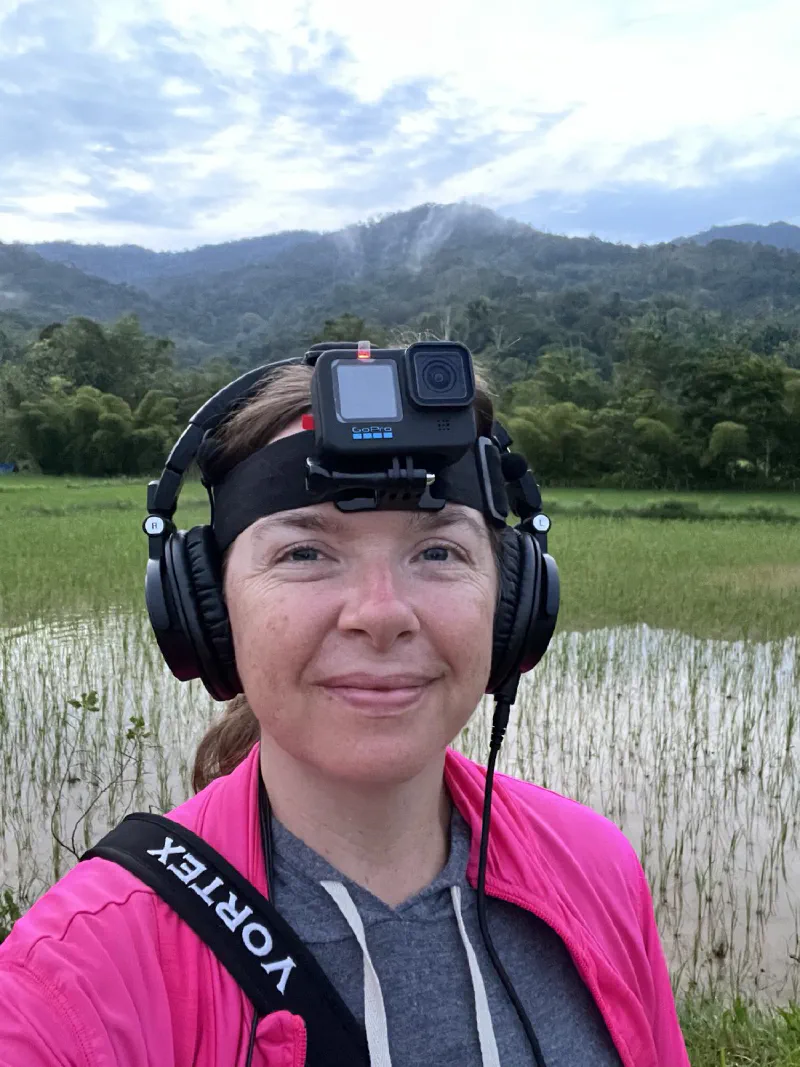
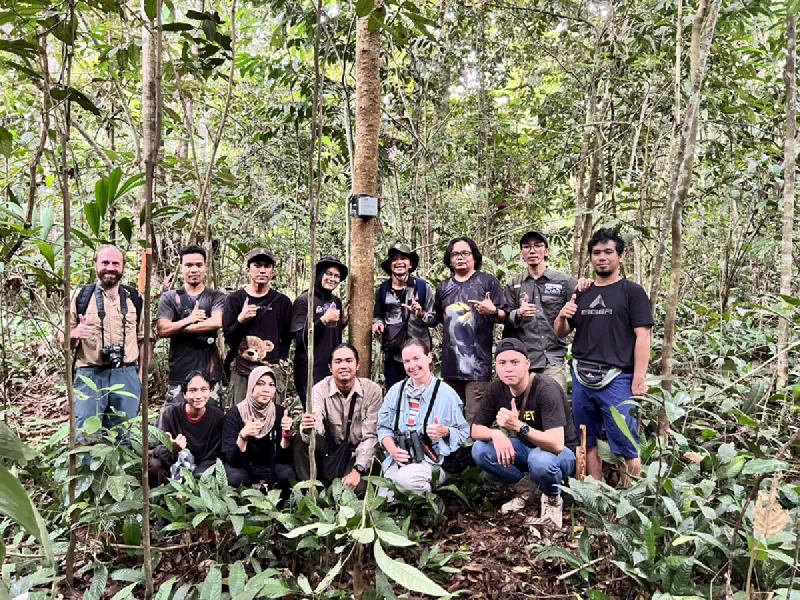
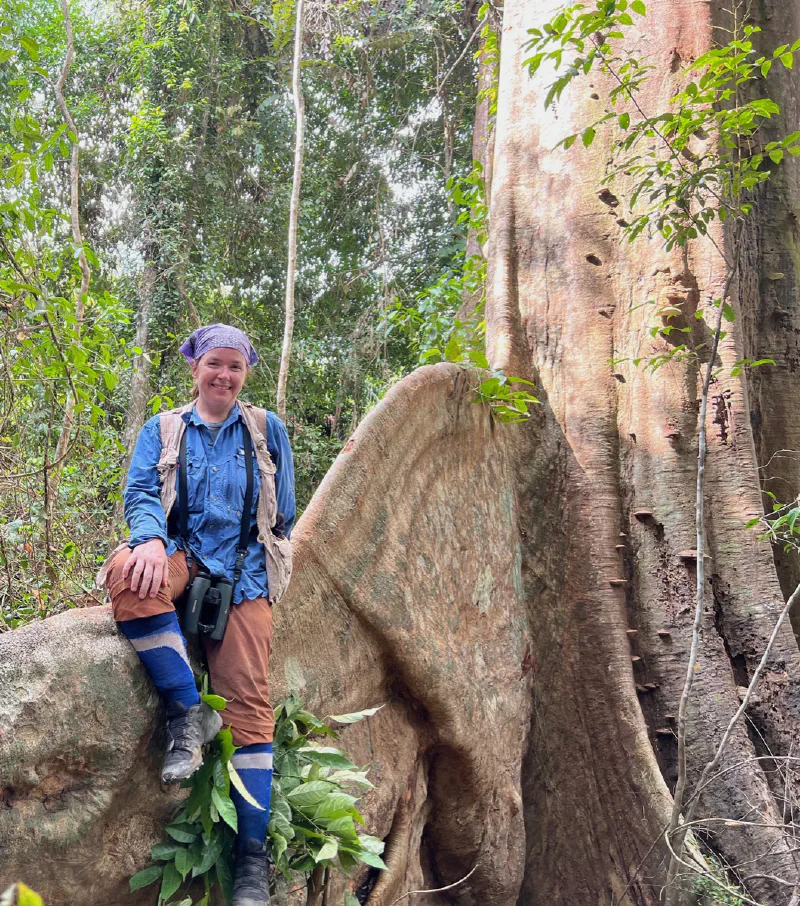
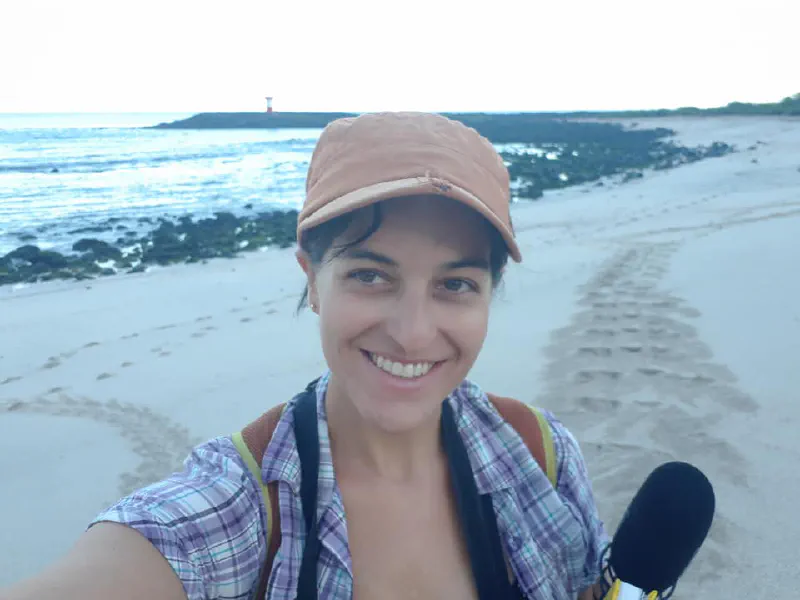
With a background in biological anthropology and animal behavior, Dr. Wendy Erb has studied the ecology, social behavior, health, communication, and conservation of wild primates in Indonesia for the last two decades. Wendy’s active participatory research program draws on diverse theories and methods from the social and natural sciences – with a central focus on the sounds of nature – to understand the shared worlds of primates and people. Having lived and worked with Indigenous communities in Indonesia since 2005, Wendy is deeply committed to cultivating deep relationships and co-creating meaningful research that matters to local people, while constructively transforming the processes and outcomes of sound-based science.
Tuning in together: Collaborative sound science reveals resonance across people, nature, and place
Wendy M. Erb 1,2
1 Cornell K. Lisa Yang Center for Conservation Bioacoustics, Cornell University, USA
2 Cornell Lab of Ornithology, Cornell University, USA
Soundscapes are a potent yet under-utilized avenue for understanding and monitoring human-environment relationships. Sounds collected using autonomous recording units (ARUs) are not only useful for understanding wildlife ecology; they also document soundscapes that hold cultural meaning, represent environmental knowledge, and shape community identities and practices. While ARUs can provide snapshots of sound events, the embodied sensory knowledge of people can enrich and challenge understandings of soundscapes and landscapes. My work with customary knowledge-holders in front-line communities examines the impacts of land-use change, wildfires, and urban development on Indonesia’s forests and human and non-human residents. Weaving together data from ARUs, soundwalks, listening sessions, and interviews, my partners and I document how human-environment connection is captured, produced, and understood through sound. This work explores the conservation potential of adopting an inclusive, bioculturally grounded, sound-based research praxis that braids multiple ways of knowing and demonstrates how transdisciplinary action research can lead to improved understandings of and outcomes for the connections among people, nature, and place.
Dr Zuzana Burivalova
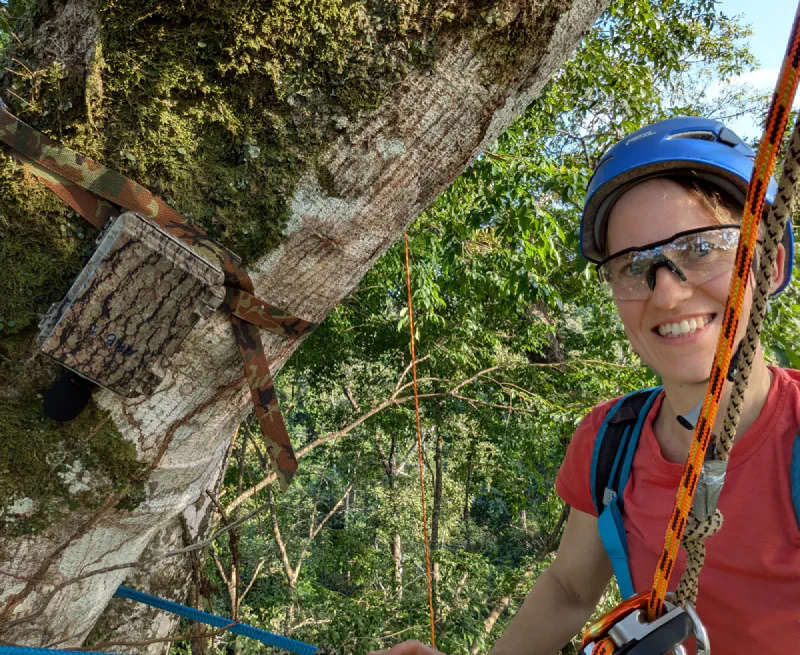
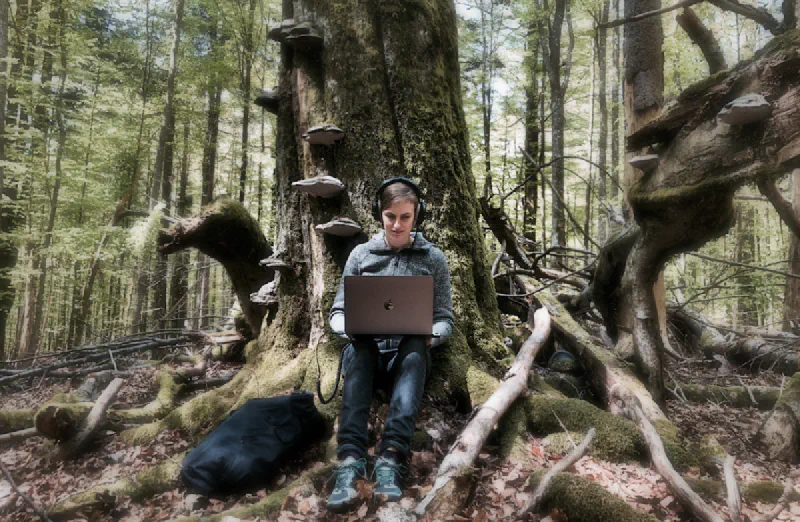
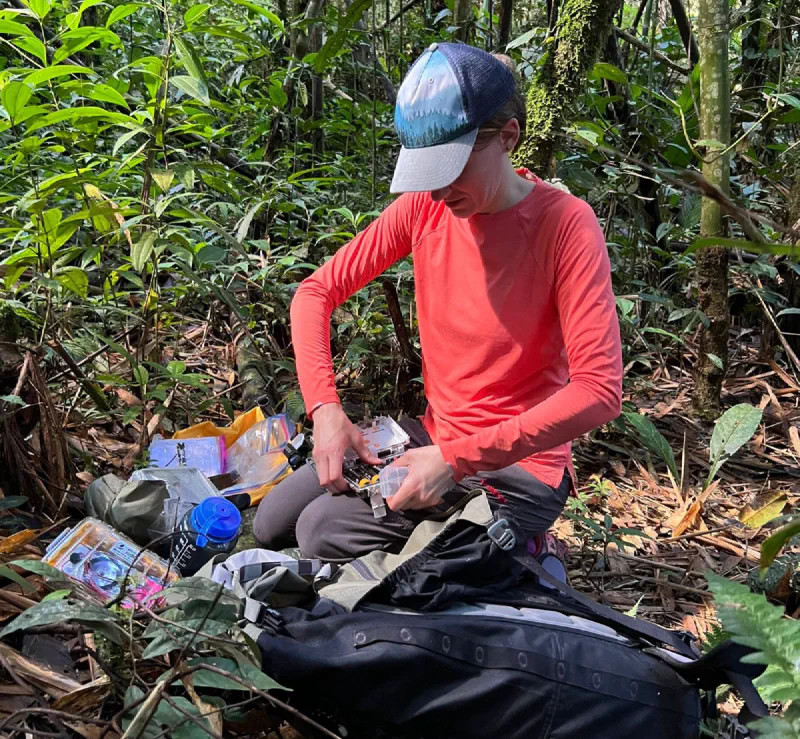
I am an Associate Professor at the University of Wisconsin-Madison, where I am affiliated with the department of Forest & Wildlife Ecology, The Nelson Institute for Environmental Studies, and the Center for Sustainability and the Global Environment. I am the Principal Investigator of the Sound Forest Lab, where we research ways to protect biodiversity in tropical forests, both forests that are used by people, and those set aside for conservation, from national parks to small community protected areas. We try to answer questions in tropical forest conservation and ecology using both old and new technologies, including bio- and ecoacoustics. I am the 2021 winner of the nature award for driving global impact and a recipient of the 2023 WINGS Women of Discovery Award.
What role will ecoacoustics play in the post 2030 conservation agenda, and how can we contribute?
Ecoacoustics has transformed from a niche discipline into a globally used approach for monitoring biodiversity across ecosystems and scales. Advances in passive acoustic monitoring, machine learning, soundscape analysis, and remote sensing integration now allow us to collect unprecedented volumes of ecological data from some of the most remote and threatened environments on Earth. Yet important questions remain: when do acoustic measurements actually help conservation decisions? Are there ways to facilitate the responsible and effective uptake of ecoacoustics by the conservation sector?
In this talk, I explore gaps between acoustic data collection and conservation action. I argue that the future impact of ecoacoustics will depend not only on improving algorithms or expanding monitoring networks, but on investigating how ecoacoustics fits in the realities of decision-making in conservation. The ultimate value of sound-based approaches to conservation, including species detection and soundscape analysis, depends on whether they provide information that is interpretable, credible, scalable, and relevant to specific conservation decisions.
Drawing on examples from tropical forests and large-scale biodiversity monitoring initiatives, I will discuss several challenges: making conservation meaning from acoustic measurements, quantifying uncertainty and evidence strength, building long-term baselines, navigating conflicting results, and ensuring that monitoring systems remain equitable and locally relevant.
Panel Session
Listening for Nature: Priorities, Challenges and the Future of Ecoacoustic Monitoring
Description: Ecoacoustics promises scalable, non-invasive and data-rich biodiversity monitoring, but can it consistently deliver the evidence and outcomes needed? With a range of national and international perspectives, this panel will explore how ecoacoustic monitoring can be designed around clear conservation decisions and priorities, its current limitations, and be developed responsibly in partnership with First Nations, Indigenous Peoples and local communities.
Panelists: Brad Law, Daniella Teixeira, Emily Hynes, John Quinn, Ben Gottesman
Monday Workshops
Workshops will be held on the Monday. Registered congress attendees will receive a link to choose the workshop they would like to attend. We will prioritise one workshop per person until capacity is reached to give everyone the opportunity to participate.
See the headings below for more information on the workshops being offered.
The Hitchhiker’s Guide to Acoustic Localisation
Proposal
This workshop’s main target audience is ecologists and everybody who is interested in broadening their understanding of bioacoustic methodology. In this hour-long session, after a short introduction into the field of bioacoustic monitoring, participants will learn how to set up our bioacoustic recorders, use array configuration, test the machines for their functionality, and how the resulting data can be processed and mapped.
Localisation through bioacoustics is becoming increasingly popular among ecological consultants and researchers, and it is a valuable, low-impact, and low-cost tool for monitoring population density and occupancy of target species in a region. Especially animals that show cryptic behavior and are difficult to observe actively can be detected and monitored this way. This workshop supports collaboration and knowledge exchange in conservation technology by demonstrating an accessible, replicable, and standardised approach to acoustic localization. Workshop participants will learn how to correctly collect, store, and process bioacoustic data. Ultimately, the goal is to fosters partnerships between ecologists, engineers, and technologists advancing wildlife monitoring.
Active participants will need to bring their own laptops, as software and example data will be provided to work along with the workshop explanations.
Duration: Half-day (approx. 3 hours)
Workshop lead: Frontier Labs
Maximum number of participants: 25
Developing best practice guidelines for ecoacoustics in Australia
Proposal
Ecoacoustic studies are often used to support developments impacting our native wildlife and spaces. There is concern that lack of standardisation in practice may be resulting in insufficient surveys, inconsistent data collection and misinterpretation of results.
To increase awareness and understanding of the technique, we are developing a guideline to provide foundational knowledge and set minimum standards for best practice across the discipline. This will facilitate the appropriate use of the technique in a wider range of applications and promote consistency and standardisation, enabling effective data sharing and supporting robust scientific investigation. The guideline will include practice in audible and ultrasonic applications and is intended for use by anyone involved with ecoacoustic monitoring in Australia.
The project is working to ensure these guidelines reflect best practices and encourage adoption within the community and industry.
During this workshop, we will introduce the project, then hold an interactive session that promotes discussion and gathers feedback that will contribute towards the guideline development. Please note, if you have previously attended one of our workshops, this workshop is different and we invite your input again! We will dive into specifics within the guideline content requiring discussion and input from the ecoacoustics community.
Duration: Half-day (approx. 3 hours)
Workshop lead: May-Le Ng & Kristen Thompson - Ecoacoustics Guidelines Australia Project
Maximum number of participants: TBD
Building and Running Recognisers with Ecosounds
Proposal
This workshop is for researchers and ecoacoustics practitioners undertaking acoustic monitoring of the environment for their species of interest. We will use the Ecosounds cloud platform to build call recognisers, run them at scale, verify detections and make sense of the results.
Prior to the workshop, participants will upload their datasets to Ecosounds, either as public projects or private projects accessible only to them.
During the workshop participants will:
- Learn some basic, high-level theory on convolutional neural network embeddings.
- Build a custom call recogniser using Perch embeddings.
- Learn how to run this recogniser at scale over large ecoacoustic datasets in the cloud.
- Use the Ecosounds verification tools to rapidly validate detections.
- Explore methods to aggregate detections and incorporate results into their research.
While we are using the Ecosounds platform for this workshop, the recognisers you build will be able to be used independently (without Ecosounds) on your own compute resources in the future.
As part of our commitment to Open Science we request that all recognisers are made freely available and open source. Note: there is no obligation to make audio open, and uploading to ecosounds does not relinquish ownership of that data in any way.
This workshop will be run by the Open Ecoacoustics team with support from the ARDC.
Duration: Full day (approx. 6 hours)
Workshop lead: Philip Eichinski - Open Ecoacoustics
Maximum number of participants: 25
Dandhigu Yimbana: Listening on Country and the Ethics of Ecoacoustics
Proposal
Ecoacoustics holds profound potential for communities whose relationships with Country are inseparable from health and wellbeing — yet the discipline remains disproportionately concentrated within well-resourced institutions and scientific research. This workshop invites delegates to explore how ecoacoustics can be practised and shared more equitably and ethically, drawing on the framework from the ARC Discovery Indigenous project “Dandhigu Yimbana: Listening on Country for Social and Emotional Wellbeing”.
This workshop positions listening as a relational act and will bring together First Nations scholars, researchers, practitioners, and community members to examine the ethical foundations of field recording and acoustic monitoring. Participants will engage with questions around permission and consultation for ecoacoustic recording and how to embed Indigenous data sovereignty and knowledge into ecoacoustic research. The workshop will involve practical ecoacoustic field recording and listening on Country, and is suitable for emerging and experienced scientists and researchers wanting to explore the ethical foundations of sound recording and the interdisciplinary potential of listening as a method to inform research decisions.
The session aligns with WEC 2026’s commitment to diversity and inclusion and the theme “Making ecoacoustics accessible”. All field recording equipment will be provided, and the participation of Elders are resourced through ARC Discovery funding.
Duration: Full day (approx. 6 hours)
Workshop lead: Dr Leah Barclay - University of the Sunshine Coast, Creative Ecologies Research Cluster
Maximum number of participants: 25
From Priorities to Practice: Building a Global Bioacoustics “Network of Networks”
Proposal
This workshop builds upon a global bioacoustics horizon scan identifying priorities across five themes: next-generation recorders, analytical methods, data exchange, global participation, and scaled impact. Following a successful regional workshop at ICTC Peru, this three-hour session aims to design a collaborative, regional-node-based global infrastructure: a ““Network of Networks”” to organize and execute future actions.
The session maximizes co-design. After an introduction covering the horizon scan and lessons from Peru, participants will divide into groups to identify action steps and technical barriers across three areas. Theme 1 (Data & Standards) focuses on PAM metadata, annotation protocols, large datasets, and soundscape databases. Theme 2 (AI & Rigor) addresses recognizer building and incorporating machine detection uncertainty into reporting. Theme 3 (Equity) explores ways to make ecoacoustics globally accessible.
Following a break, a 60-minute facilitated mapping exercise will guide the group. We will collaboratively map connections between existing regional networks, labs, and initiatives to execute action plans, effectively defining the overarching network’s foundational architecture.
Expected outcomes include an ““Action Roadmap”” addressing key themes and the formal initiation of the Bioacoustics Network of Networks, complete with defined participant nodes, scoped collaborative projects, and communication channels to ensure sustained momentum.
Duration: Half-day (approx. 3 hours)
Workshop lead: John Quinn - Furman University
Maximum number of participants: 45
Using the EcoCommons Platform to Run Species Distribution Models with Acoustic Occurrence Data
Proposal
EcoCommons Australia provides a comprehensive platform for ecological modelling, featuring thousands of curated datasets and expert-developed workflows for species distribution and community modelling.
This workshop will begin with a brief introduction to species distribution model (SDM) theory, followed by a guided tour of the platform. Participants will learn how to incorporate occurrence data derived from acoustic monitoring into SDMs, with a focus on selecting appropriate occurrence and environmental data for different research questions. This workshop is suitable for beginners to intermediate users with a basic understanding of ecological data. We will cover:
- Basic concepts and applications of SDMs and occurrence data
- Manual surveys, camera trapping, passive acoustic monitoring (PAM)
- How to access biodiversity records from open data portals via EcoCommons platform
- Converting acoustic data into occurrence records
- An introduction to the EcoCommons platform and its 50,000+ curated environmental datasets
- Selecting appropriate environmental layers for modelling
- Building and running SDMs using acoustic occurrence data and a selection of 19 available algorithms on the EcoCommons platform
- Exploring and interpreting model outputs for use in biodiversity and conservation research and management
- Overview of EcoCommons coding notebooks and Occupancy Model example
By the end of the workshop, participants will understand how to:
- Navigate the EcoCommons platform
- Select fit-for-purpose data for your research question
- Run robust and repeatable SDMs with occurrence data derived from acoustic monitoring
- Produce and interpret SDM outputs (e.g. model evaluation metrics, habitat suitability maps)
- Access EcoCommons coding notebooks
Duration: 1-1.5 hours
Workshop leads:
Dr Ryan Newis (ryan.newis@qcif.edu.au)
Dr Renee Piccolo (r.piccolo@uq.edu.au)
Prerequisites: Please try to login to EcoCommons with your institutional account (if you have one) through Australian Access Federation (AAF). If you can’t find your institution via AAF, or don’t have one, please request a free EcoCommons Account prior to the workshop.
Materials required: Laptop that can access internet.
Lunchtime Workshops
‘Sound Guardians’ film screening
Synopsis: Jakarta is the world's fastest-sinking city. In response, Indonesia's government is building a new capital city in the hills of east Borneo. But these hills are some of the planet's most biodiverse ecosystems and home to the indigenous Balik people. Abidin, a Balik elder, teams up with bioacoustic scientists to document the impacts of the new city's construction on endangered species through sound. With his tribe's survival at stake, recording the sounds of the forest is a way for Balik people to preserve their knowledge and pass it on to future generations – before it's too late. Sound Guardians is a cinematic and sonic celebration of east Borneo, encouraging the viewer to reflect on their own evolving soundscapes in a time of climate upheaval. View Trailer.
Director Bio: Leah is a two-time Emmy Award-winning documentary filmmaker based in Colorado and has been making short documentaries for over a decade. Her work has appeared on FX/Hulu, The New York Times, VICE News, The Atlantic, and more. A native of France, she speaks four languages which have helped her tell stories all over the world. She is passionate about character-driven storytelling that amplifies overlooked voices and advances climate justice.
Open Ecoacoustics: scaling acoustic data, verification and analysis, and shaping the platform’s next phase
Open Ecoacoustics is a national open infrastructure for ecoacoustics. It underpins two of Australia’s largest acoustic collections, the Australian Acoustic Observatory (A2O) repository and the Ecosounds database, which together hold more than a petabyte of audio. The platform provides an integrated set of tools to manage, share and analyse ecoacoustic data at scale. These tools include cloud-based BirdNET and Perch analyses, support for custom recognisers, and the data powering the Call Detective interface, which lets projects scale the verification of AI detections across expert and citizen-science communities.
This workshop will include a brief overview of the project and a practical tour of what the tools offer, including how Call Detective can accelerate verification for large monitoring programs. We will set out the project’s operating model, how Open Ecoacoustics prioritises free access for Australian researchers who are developing nationally significant reusable ecoacoustic data assets, while actively seeking partnerships and co-investment.
The heart of the session is a conversation with you. As the team plans the next phase of the project, beginning in 2027, we want to hear what data you are collecting, functionality you would most value, what your ecoacoustic workflows require, and where your current pain points lie. Your input will help shape the platform’s roadmap.
We warmly encourage anyone interested in storing, processing or verifying acoustic data to come along, share their needs, and sign up to begin onboarding with the platform’s data storage and processing tools.
Who should attend: Researchers, government and conservation practitioners, and citizen-science coordinators working with, or planning to work with, passive acoustic monitoring data.
Format: Interactive workshop and community consultation
Presenters: Paul Roe, Anthony Truskinger and Lola Lange (Open Ecoacoustics); Rob Clemens (Australian Research Data Commons)
Organisation: Open Ecoacoustics and Australian Research Data Commons
From Micro 2 to SM5Bat: Simplifying Passive Recorder Workflow with the Song Meter Configurator App
Discover how Wildlife Acoustics passive recorders can be used for your next ecoacoustics project. In this interactive hands-on workshop, participants will be introduced to Wildlife Acoustics passive recorder range, from the compact Song Meter Micro 2 to the powerful everything recorder SM5Bat, and how the Song Meter Configurator app can enhance an ecoacoustics project workflow. Through this hands-on session, participants will learn how to simplify recorder set up through connecting devices, customising recording schedules, configurating settings, and preparing recorders for deployment, all using bluetooth from their phone or tablet.
Whether you are new to passive acoustic monitoring or looking to improve your workflow, this session will help you get up and running quickly and confidently.
Participants are encouraged to download the app before the session, but this is not essential to participate.
Speaker: Dr Lisa Cawthen
Organisation: Wildlife Acoustics
How to PAM – Theory and Praxis of Deploying an Acoustic Recorder
We aim to introduce participants to the theoretical foundations, practical applications, and growing relevance of Passive Acoustic Monitoring (PAM) in ecological research and consultancy.
The short theoretical part will be followed by a practical demonstration: using Frontier Labs’ BAR-V2 units, we will show how to create and install a recording schedule, how to successfully deploy the recorder, and how to retrieve the data at the end of the deployment. Different features and applications of the device will be highlighted. Attendees are invited to follow along on their own laptops, using our free scheduler app; however, this is not a requirement to participate.
The goal of this session is to equip attendees with a deeper understanding of PAM and its increasing value in the ecological field, as well as giving them a first glimpse into the practical side of the methodology. Participants are invited to share their questions and their own experiences regarding bioacoustic research. A lively and open discourse is hoped for, exploring the possibilities, challenges, and future directions of PAM together.
Speaker: Kieran Aland
Organisation: Frontier Labs